
How Much Does Dog Training Cost? Group Classes, Private Sessions and Board-and-Train
Dog training is the pet expense with the widest price spread and the least price transparency. A six-week group class at a shelter and a two-week board-and-train program are both sold as "dog training," and one costs about $200 while the other costs more than a used car payment. They are not the same product, and the gap is not mostly about quality. It is about how many hours of a person's time you are buying, whether your dog is boarded during those hours, and whether the trainer is teaching you or handling your dog for you. Once you separate those three variables, the prices stop looking random.
Group classes: the published shelter numbers
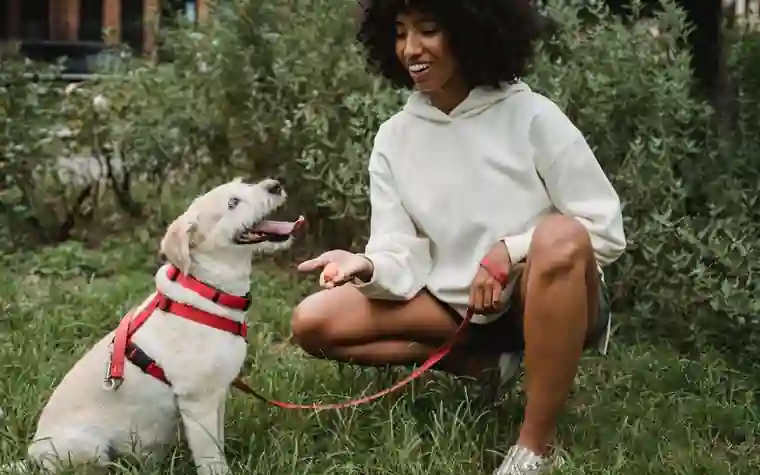
Nonprofit shelters publish their class fees, which makes them the most useful anchor available. Oregon Humane Society lists Puppy Preschool and Puppy Kindergarten at its Portland campus for $200 for six weeks, with the price scheduled to move to $220 beginning September 1. The same programs at its Salem campus run $165 for five weeks, going to $185 on September 1. Preschool is for puppies 9 to 15 weeks old at the start of class; Kindergarten is for 16 to 24 weeks.
Per session, that is roughly $33 per week in Portland and $33 per week in Salem — the campus difference is the number of weeks, not the weekly rate. That is a useful thing to notice, because two classes advertised at $200 and $165 are not necessarily priced differently at all.
Drop-in socialization is priced separately and much lower. Oregon Humane's puppy romps are $25 per session, or a five-pack for $100. These are supervised play sessions, not instruction, and they are grouped by age band. If your actual goal is exposure to other puppies rather than cue training, this is the cheaper line item and it is a different product.
Retail chains price in bundles, not per class
Big-box pricing works differently. PetSmart runs six-week Puppy, Beginner and Intermediate classes and sells them bundled: its published bundle of a Puppy or Beginner class plus an Intermediate class carries a retail value of $298 with $49 in bundle savings. That implies roughly $149 per six-week class at list price, before whatever discount a given store applies.
The important caveat on chain pricing is that it is set locally. The booking system asks you to select a store before it shows a price, which means the number you see in one metro area is not the number in another. Any national figure for chain training is an average of a range that actually exists at the store level.
Private sessions and board-and-train: where ranges replace prices
Private training and board-and-train are almost never published, because they are quoted per dog. Industry price guides that aggregate trainer quotes put group classes around $30 to $80 per session, private lessons around $75 to $200 per hour, and board-and-train programs at roughly $1,000 to $3,000 per week. Treat those as the shape of the market rather than as a quote. They are collected from trainers who choose to list prices, and the top and bottom of each band are real.
The reason board-and-train costs an order of magnitude more is arithmetic, not mystique: you are paying for boarding, feeding and staffing your dog around the clock for one or two weeks, plus training time, plus the handover sessions that teach you what the dog learned. If a two-week program is quoted without any handover sessions included, that is a line item you will pay for later.
Nobody licenses dog trainers in the US
This is the single most important thing to understand before comparing quotes. Dog training is not a licensed profession in the United States. There is no state board, no required exam, and no legal minimum before someone can advertise as a trainer. Certifications exist and some are rigorous, but they are voluntary credentials issued by private organizations, not licenses.
That has a direct pricing consequence: price is not a proxy for credential. A $200 per hour trainer and a $75 per hour trainer may hold identical qualifications, or the cheaper one may hold more. When you ask what a quote includes, ask what the letters after the trainer's name stand for and who issues them.
On method, the American Veterinary Society of Animal Behavior's 2021 position statement on humane dog training recommends that reward-based methods be used for training everyday skills and addressing unwanted behavior, and advises against aversive methods, stating there is no evidence they are more effective in any context. AVSAB has separately clarified that it does not endorse any specific trainer or credentialing organization. That statement is worth reading before you buy a program, because "guaranteed results" pricing is often attached to methods it addresses.
The costs that are not on the price list
Three items reliably show up after you have already chosen a class.
- Proof of vaccination. Group classes require it, and if your puppy is mid-series you may need an extra clinic visit to be eligible for the start date. Shot-by-shot pricing is in what dog vaccinations cost.
- Equipment. Some programs specify a particular harness, long line or treat pouch. It is usually modest, but it is not always included.
- Travel fees. In-home private training is often quoted as a session rate plus mileage beyond a set radius. Ask where the radius ends before booking.
Behavior consults are a separate market
There is a real distinction between a manners class and a consultation for fear, reactivity or aggression. The second involves a longer intake, a written plan, and sometimes coordination with your veterinarian. It is priced accordingly and generally quoted per case rather than per session.
The cost mistake here is buying the wrong product: enrolling a dog with a serious fear response in a six-week group class, finding it does not work, and then paying for the consult anyway. If the behavior you are trying to change involves fear or a bite risk, the consult is the first purchase, not the fallback.
How to compare two quotes in five minutes
- Convert everything to dollars per contact hour. Six weeks at one hour a week for $200 is $33 an hour; a $150 private session is $150 an hour. That is the real comparison.
- Ask what happens between sessions — written homework, message support, or nothing. Some private rates include follow-up and some do not.
- For board-and-train, ask how many handover sessions with you are included and what happens if the behavior returns at home.
- Check the class size and instructor-to-dog ratio. A $60 class with ten dogs and a $60 class with five are different purchases.
- Confirm the vaccination requirement and the start date together, so you are not paying for an extra vet visit to make a deadline.
- Put the total next to your other recurring line items — first-year puppy costs land training in the same season as vaccines and neutering, and training is usually the one you can schedule rather than the one that schedules you.
One planning note: training is a predictable, one-time-ish expense, which puts it in a different budget category from boarding, which recurs whenever you travel, and from insurance premiums, which exist to cover the costs you cannot schedule at all. Most pet insurance policies do not reimburse training as a medical expense; check your own policy wording rather than assuming either way.
Sources and date: Oregon Humane Society published class pricing for Portland and Salem puppy programs, including the stated increases effective September 1 and the drop-in romp rates; PetSmart's published six-week class structure and bundle retail value of $298 with $49 in bundled savings; American Veterinary Society of Animal Behavior, "Position Statement on Humane Dog Training" (2021), and AVSAB's clarification that it does not endorse individual trainers or credentialing bodies; industry price aggregators for the private-session and board-and-train ranges, which are collected quotes rather than published rates. Verified August 2026. Prices are regional and change without notice — confirm the current figure with the specific provider before booking. This article covers cost comparison only. It is not veterinary or behavioral advice, and fear, anxiety, reactivity or aggression in a dog should be discussed with your veterinarian, who can rule out medical causes and refer you appropriately.
All content is fact-checked under our editorial standards.