
What a Cat Costs After Age 10: The Screening Schedule That Doubles and the Two Diagnoses That Set the Bill
Cat budgets are usually built once, in the first year, and then left alone. That works until the cat turns ten. Nothing dramatic happens on the birthday, but the professional guidance about what that cat needs changes, and the changes are the kind that show up on a bill rather than in a behavior. The visit count goes up. A screening panel gets added that was optional before. And two conditions that are uncommon in a five-year-old become common enough that budgeting as if they will not happen is a coin flip. Here is what actually moves, and roughly what each piece costs.
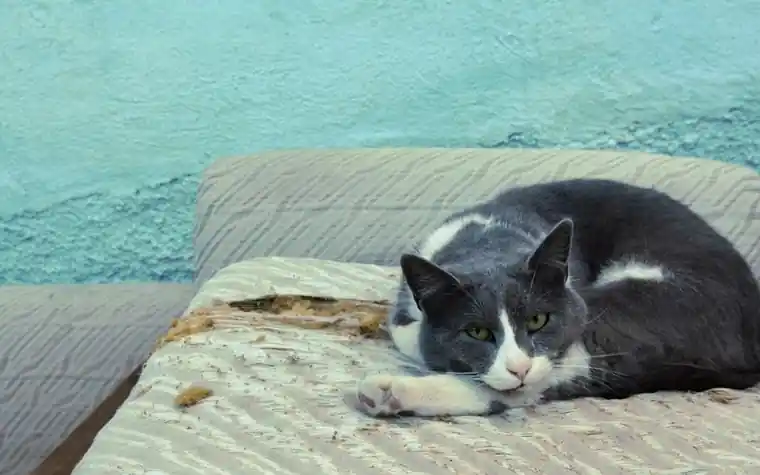
Ten is not a marketing number
The 2021 AAHA/AAFP Feline Life Stage Guidelines divide a cat's life into kitten, young adult, mature adult and senior, with an end-of-life stage alongside them. Senior begins at over 10 years of age. The task force also notes that some cats are better treated as senior as early as eight, and earlier still for certain breeds or genetic predispositions.
That matters for costs because "senior" is the label that changes what a clinic recommends at a wellness visit. It is not a category invented to sell an upgrade. It is the age at which the published guidance starts assuming that a normal-looking cat may already be carrying something that only bloodwork will show.
The visit count is the first thing to double
The AAFP's senior care guidance makes an argument from arithmetic. A cat's lifespan is roughly five times shorter than a person's, so the true equivalent of an annual human physical would be an exam roughly every 10 to 11 weeks. The guidelines concede this is not practical, but use it to make the point that once a year is not enough for an older cat.
In practice the AAFP describes healthy senior cats between 10 and 15 as needing exams every six months, and cats over 15 as better served every four months. So the first line item that changes is simply frequency: an exam fee you used to pay once a year, you now pay twice, and eventually three times. Nothing about the individual visit got more expensive. You just buy more of them.
The senior panel, itemized
The second change is what gets run at those visits. The senior baseline database in the guidelines is specific, and it is five items:
- Complete blood count — hematocrit, RBCs, WBCs, differential, platelets
- Serum biochemistry panel — including BUN, creatinine, phosphorus, potassium, calcium, glucose, liver enzymes and proteins
- Urinalysis — specific gravity, sediment, protein, glucose, ketones, pH
- Total T4
- Blood pressure
Four of those five are lab tests with published prices. The ViTALS diagnostic laboratory at the Virginia–Maryland College of Veterinary Medicine publishes its fee schedule, effective January 1, 2026:
| Test | ViTALS list price |
|---|---|
| CBC, small animal | $88.00 |
| Chemistry, small animal profile | $97.00 |
| Urinalysis, routine with specific gravity and sediment | $57.00 |
| Total T4 | $53.00 |
| Panel total | $295.00 |
Blood pressure is measured in the room and does not carry a lab fee, though clinics often bill it separately. Note what this figure is and is not: it is a reference laboratory's list price, not the number on your invoice. Clinics mark up outside lab work, and in-house analyzers price differently again. The gap between the two is the whole subject of our breakdown of what vet bloodwork costs.
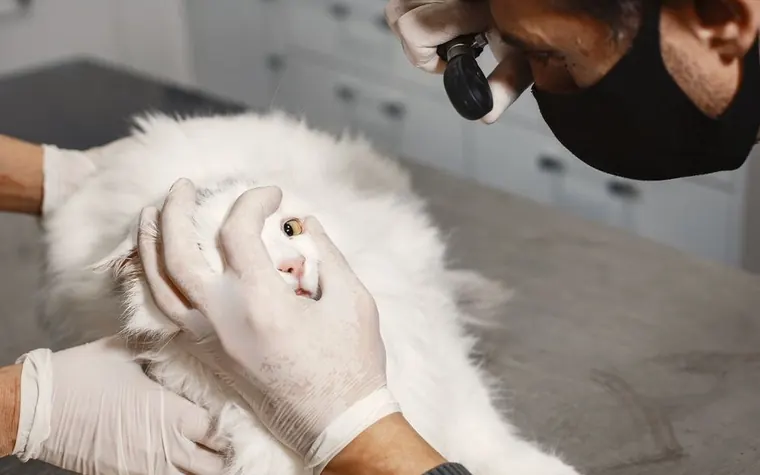
Screening is the cheap part of the year
It is worth sitting with the shape of these numbers before going further. Two exams plus one senior panel is a few hundred dollars added to a year. That is real money, but it is a known, schedulable, once-or-twice-a-year amount. Everything expensive that follows is expensive because it is ongoing — monthly, indefinitely, with rechecks attached.
Which is why the screening panel is doing something specific for your budget as well as for the cat: it converts an unknown into a dated line item. A cat diagnosed at a wellness visit enters a management plan. A cat diagnosed because it collapsed on a Saturday enters through the emergency door, where the exam fee alone starts higher before anything is done.
Two diagnoses set most senior bills
Hyperthyroidism is the one with a hard prevalence figure attached. The AAFP senior care guidelines state that it affects 10% of cats over 10 years of age. That is why total T4 is in the senior panel and not the young adult one. Once diagnosed, the cost structure branches: daily oral medication is an ongoing monthly expense with periodic T4 rechecks attached, while radioiodine treatment is a substantially larger one-time cost that, for suitable cats, ends the monthly spending. Published cost guides put daily medication in the low tens of dollars per month and radioiodine in the four figures, but both vary enough by region and provider that the only number worth planning around is a written estimate from the practice you would actually use.
Chronic kidney disease is the other. It is the reason creatinine, phosphorus and urine specific gravity are on the list, and the reason a urinalysis is not optional — concentrated urine is what tells you the kidneys are still doing their job, and a blood panel alone will not show it. Management costs are driven less by the diagnosis itself than by three recurring items: a prescription diet, periodic recheck bloodwork, and whatever supportive care is added as the stage advances. The recheck interval is what most owners underestimate, because it turns bloodwork from an annual expense into a quarterly one.
Arthritis is the line nobody budgets for
The prevalence figure here is the most striking one in the guidelines: degenerative joint disease affects up to 74% of cats aged 12 and over. Nearly three in four. It rarely announces itself, because cats do not limp in the way dogs do — they stop jumping onto the counter, and the household reads that as the cat slowing down.
The budget consequence is indirect but real. Cats that stop jumping stop using litter boxes with high sides, and that produces house-soiling that gets treated as a behavior problem for months before anyone connects it to joints. Meanwhile the practical spending is on the environment: lower-sided boxes, steps to favorite spots, more boxes on more floors. Small purchases, but they belong in the senior plan rather than being discovered one at a time.
Insurance at ten is a different product
This is the point where the arithmetic is unforgiving. Pet insurance prices on age, and NAPHIA's industry figures put the national average cat premium for accident-and-illness cover near the low thirties per month across all ages — a number a ten-year-old cat will exceed, often substantially.
Premium is not the real obstacle, though. The obstacle is that anything the senior panel finds becomes a pre-existing condition the moment it is recorded, and pre-existing conditions are excluded. A policy bought at ten will generally not cover the kidney disease flagged at that year's screening. It may still be worth buying for what has not happened yet — accidents, cancer, the conditions of years twelve through eighteen — but it is not a way to fund a diagnosis already in the file. The mechanics of what counts as pre-existing, and the waiting periods that apply before anything is covered at all, are set out in our guide to waiting periods and pre-existing conditions.
What a senior year looks like on paper
Putting it in order, the baseline senior year is: two exams instead of one, one senior screening panel built from CBC, chemistry, urinalysis, T4 and blood pressure, plus the ordinary running costs — food, litter, preventatives — that did not change. Against the annual figures in our breakdown of what a cat costs per year, that is a few hundred dollars of addition, not a different order of magnitude.
The order of magnitude changes only if something is found, and the honest way to budget for that is not a single number but a branch. There is a version of year eleven that costs what year ten cost plus screening, and a version that adds a monthly medication, a prescription diet and quarterly rechecks. Roughly one in ten cats over ten will take the hyperthyroid branch. What screening buys is not a lower bill — it is knowing which branch you are on while the options are still cheap ones, and finding out on a Tuesday morning rather than through the emergency door.
This article covers costs, coverage and procedures only. It is not veterinary advice and does not diagnose, treat or recommend care for any individual animal. Prices cited are published list prices or industry averages as of August 21, 2026 and vary by region, provider and individual patient; ask your veterinary practice for a written estimate. Any decision about your cat's health belongs with your veterinarian.
All content is fact-checked under our editorial standards.