
How Much Does Vet Bloodwork Cost? The Lab's List Price vs. Your Bill
Bloodwork is the line item that surprises people most on a vet bill, because it is quoted as one number — "labs" — when it is really a bundle of separately priced tests that can be run in two completely different places. The same panel can appear on your invoice at $97 or at $295 depending on whether the sample went into an analyzer down the hall or into a courier bag headed for a university reference lab. Both numbers are published. Here is what each one actually covers.
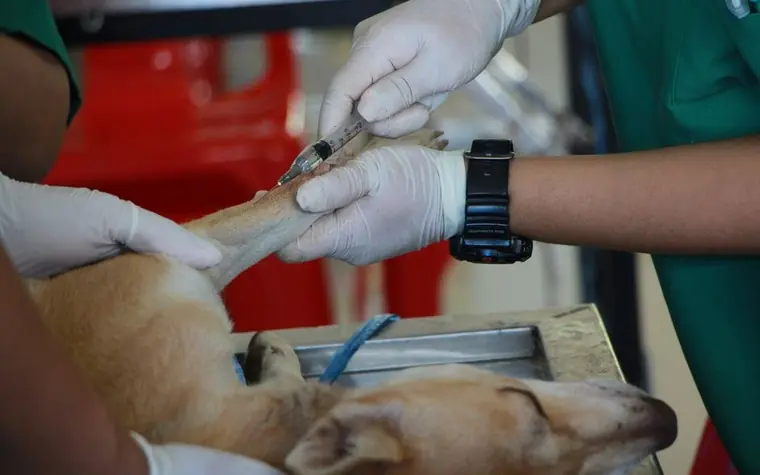
Two places your pet's blood can go
Every clinic chooses between in-house analyzers and a send-out reference lab, and often uses both. In-house means the practice bought the machine and the single-use cartridges; results come back in fifteen to thirty minutes, which is why sick-pet and pre-anesthetic cases usually run in-house. Send-out means the sample is shipped overnight to a commercial or university laboratory; results take one to three days and the per-test price the clinic pays is lower.
That difference is the whole reason two clinics quote you wildly different numbers for "a CBC and a chem panel." Neither is overcharging. They are selling two different products: speed versus price.
It also explains the word STAT when you see it on an invoice. STAT means the sample was run immediately, ahead of the queue, on the practice's own equipment. It is a legitimate charge for a sick animal in front of you. On a routine senior wellness visit where nothing is urgent, it is worth asking whether the same panel can go out to the lab instead.
What a reference lab actually charges
University veterinary labs publish their fee schedules, which makes them the cleanest available benchmark. The Virginia-Maryland College of Veterinary Medicine's ViTALS laboratory lists the following, with fees effective January 1, 2026:
| Test | Listed fee |
|---|---|
| CBC, small animal | $88.00 |
| Small Animal Profile (full chemistry) | $97.00 |
| Small Animal Mini Profile | $63.00 |
| PREOP Panel | $73.00 |
| Renal Panel | $79.00 |
| Urinalysis with sediment exam | $57.00 |
| Total T4 | $53.00 |
| T4 plus TSH | $105.00 |
| Heartworm antigen test | $48.00 |
Read those as wholesale-ish figures: this is what the laboratory bills the submitting veterinarian, before the practice adds handling, courier costs, the technician's time drawing and spinning the sample, and its own margin. Your invoice will be higher. How much higher is the practice's decision, not the lab's.
What a clinic actually charges you
Client-facing price lists are rarer, but some practices post them. A Florida general practice publishes an in-house STAT CBC plus chemistry at $295.75, an in-house chemistry profile alone at $225, urinalysis at $77.75, and an in-house heartworm test at $69.50. Its wellness bundles run $103.50 to $178.50 for younger pets and $187 to $257 for seniors.
Set that next to the lab schedule and the pattern is clear. The urinalysis moves from $57 to about $78. The heartworm test moves from $48 to about $70. The combined CBC and chemistry moves from roughly $185 of lab-listed tests to $295.75 run STAT in the building. The markup is real but not arbitrary — you are paying for the analyzer, the consumables and the same-visit answer.
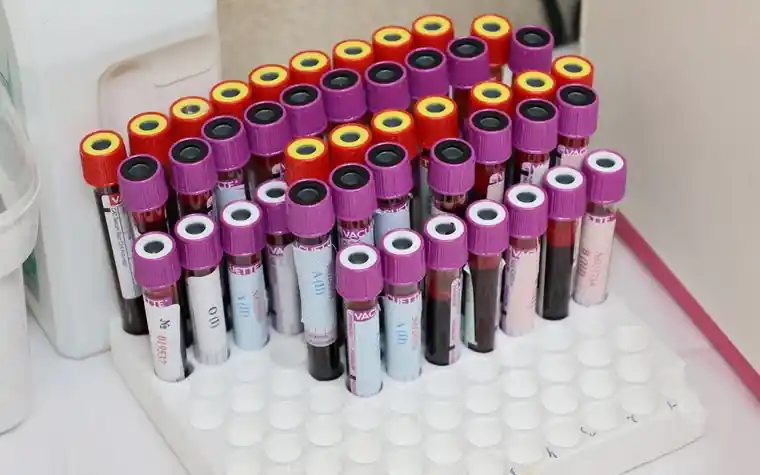
Panels are bundles, and bundles have tiers
"Blood panel" is not one thing. A CBC counts cells. A chemistry profile measures organ and electrolyte values, and comes in a full version and a shorter one — at ViTALS, $97 versus $63 for the mini. A PREOP panel at $73 is a narrower pre-anesthetic set. Individual chemistry values, ordered one at a time, list at $19 to $25 each, which is why bundling almost always beats à la carte once you need more than three or four.
Add-ons stack on top rather than replacing anything. Thyroid testing is $53 alone or $105 paired with TSH. Bile acid testing is $51 per sample and is typically drawn twice, so budget it as a pair. Heartworm work has two separate line items at ViTALS — the antigen test at $48 and the Knott's test for microfilariae at $27 — and they are not interchangeable. There is even a $60 NSAID panel, a narrow set used for pets on long-term anti-inflammatory medication, which is the sort of thing that appears on a recheck invoice without warning if nobody mentioned it at the last visit. If your estimate jumped a hundred dollars after a phone call, an add-on is usually why.
The exam fee is not included
Bloodwork prices assume you are already in the room, and the room is billed separately. The same Florida practice lists a standard exam at $69, a new-patient exam at $74, a recheck at $48 and an extended exam at $113. Budget the exam plus the labs, not the labs alone.
Imaging is its own category again — that practice lists two to four radiographic views at $193 and an in-clinic FAST ultrasound scan at about $129. Emergency settings price all of this differently, which is covered in our breakdown of what an emergency vet visit costs.
Pre-anesthetic bloodwork is a separate decision
Any procedure involving anesthesia will come with a bloodwork line, and it is usually presented as optional-but-recommended. That is where the PREOP-style panel shows up. It is also why dental and surgical estimates vary so much between clinics: two practices quoting the same procedure may be quoting different lab tiers underneath it. Both our dental cleaning cost breakdown and the spay and neuter price comparison show the same effect.

How to keep the number predictable
Four questions do most of the work. Is this running in-house or going out? If the case is not urgent, a send-out often costs less. Which panel tier is on the estimate — full profile or mini? What is bundled and what is an add-on? Thyroid, bile acids and urinalysis are frequently separate lines. Is the exam fee included in the quoted total? Asking for the itemized estimate before you approve it is normal and clinics expect it.
On the insurance side, diagnostics are usually covered under accident-and-illness plans but wellness bloodwork often is not, and reimbursement depends on how your deductible is structured — see how pet insurance reimbursement is calculated.
The short version
Reference-lab list prices for the common tests sit at roughly $57 to $97 each, and clinic-facing prices for the same work land closer to $70 to $296 depending on turnaround. A realistic budget for an exam plus a CBC and chemistry panel at a general practice is somewhere in the low-to-mid hundreds, before imaging. Ask which lab, which tier, and what is excluded before you sign the estimate.
One last practical note: if bloodwork is being repeated to track something over time, ask whether the recheck needs the full profile or only the two or three values being followed. Individual chemistry values list at $19 to $25 apiece, so a targeted recheck can cost a fraction of a repeat panel. That question is yours to raise — estimates default to the bundle.
Prices cited are published figures from the sources named above and vary by region, clinic and year. This article is about costs and billing structure only — it is not veterinary advice, and it does not interpret test results. Talk to your veterinarian about which tests your pet needs.
All content is fact-checked under our editorial standards.