
How Much Does It Cost to Manage Feline Idiopathic Cystitis (FLUTD)? Diet, Environmental Changes, and Why It Keeps Coming Back
A cat that keeps making trips to the litter box, straining, or urinating outside it isn't necessarily blocked. Most of these cats have feline idiopathic cystitis (FIC), a recurring bladder inflammation with no identifiable infection or stone behind it, and it is managed very differently from a true emergency. Real invoice data puts the annual cost of a cat with recurrent flare-ups at roughly $500 to $1,400 a year -- diet, occasional vet visits, and the medication that keeps the next flare-up further away.

Idiopathic Cystitis Is Not the Same Bill as a Blocked Bladder
FIC and a urethral obstruction share symptoms -- straining, frequent trips, blood-tinged urine -- and a cat showing them should still see a vet the same day, because only a physical exam and a bladder palpation can tell the two apart. But the bills diverge fast. An obstructed cat is a same-day surgical emergency that can run $1,500 to $5,000 once catheterization and hospitalization are added up. FIC, once a vet has ruled out a blockage, a stone, or an infection, becomes an outpatient condition managed over months, not a single crisis bill.
The First Flare-Up: Ruling Out Stones and Infection First
FIC is a diagnosis of exclusion, so the first visit is priced like any other urinary workup: an exam runs $50 to $100, a urinalysis $40 to $75, and if a bacterial infection is suspected, a culture and sensitivity test adds $75 to $200. Pain medication for the acute flare typically adds another $20 to $50. A straightforward, non-recurring episode usually lands in the same $150-$350 range as a routine urinary workup -- the cost only compounds once the same cat comes back a second and third time.
Prescription Urinary Diet: The Recurring Line on the Bill
Diet change is the management step with the most consistent evidence behind it, and it is also the one that turns into an ongoing subscription rather than a one-time charge. Therapeutic urinary diets built to increase water intake and dilute urine -- brands like Hill's Prescription Diet c/d Multicare or Royal Canin Urinary SO are common examples -- typically run $50 to $100 a month for wet or a mix of wet and dry food, priced against a similar prescription-diet commitment that cats with chronic kidney disease are already on.
Environmental Changes: Cheap Individually, Easy to Skip
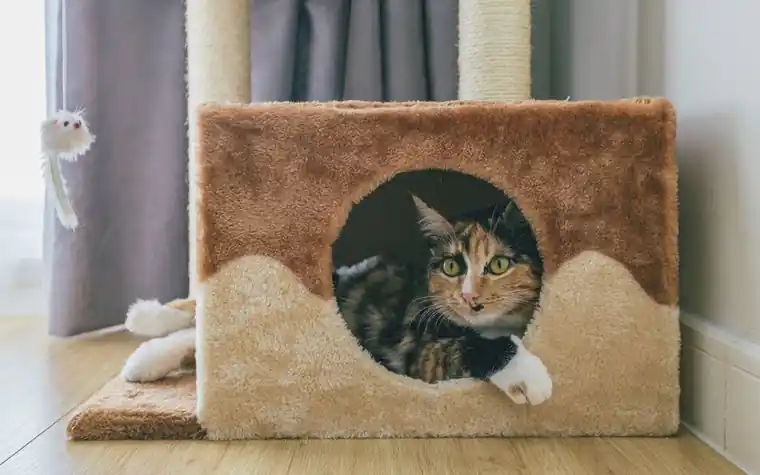
A 2006 clinical trial by Buffington, Westropp, Chew, and Bolus, published in the Journal of Feline Medicine and Surgery, found that adding what researchers now call multimodal environmental modification (MEMO) to standard care produced a significantly greater drop in urinary signs than diet or medication alone. The approach, built on the AAFP and ISFM Feline Environmental Needs Guidelines and carried forward in the 2025 iCatCare consensus guidelines on feline lower urinary tract disease, centers on three unglamorous changes: more consistent litter box access and cleaning, more predictable interaction with the cat, and owner education about triggers like household conflict or schedule changes. None of it requires a large purchase -- an extra litter box and a water fountain are the two items owners buy most often -- but it is also the step most owners quietly skip once the flare-up has passed, which is a large part of why FIC keeps coming back.
Medication: For Cats Where Diet and Environment Aren't Enough
When flare-ups keep recurring despite diet and environmental changes, vets sometimes add a compounded medication such as amitriptyline or gabapentin to reduce stress-linked bladder signaling. Compounded liquid formulations for cats commonly run $30 to $80 a month, according to cost data compiled by pet pharmacy cost trackers, though plain gabapentin capsules bought through a human pharmacy can cost under $10 a month if a vet approves that route instead. Medication is added as a second-line step in most guidelines, not a first response, because the evidence for diet and environment changes is stronger.
When It Recurs: The Annual Total, Not the Single Visit
The number that actually matters for budgeting is the yearly total, not any single line item. A cat with two to three flare-ups a year, each triggering a $150-$400 visit, plus a $50-$100 monthly diet and occasional imaging ($150 to $400) to rule out a stone that has since formed, lands in the $500-$1,400 range cited above. Cats that respond well to diet and MEMO alone tend to sit at the bottom of that range after the first year; cats with frequent recurrence and repeat imaging sit at the top.
Does Pet Insurance Cover the Ongoing Cost
Coverage depends heavily on timing. If FIC is diagnosed before a policy's waiting period ends, insurers typically classify it as pre-existing and exclude every future flare-up, not just the first one -- a meaningful risk for a condition defined by recurrence. Enrolled before any signs appear, an accident-and-illness plan generally reimburses the diagnostic workup and flare-up visits; prescription diets are usually excluded unless the policy specifically adds food coverage as a rider.
Cost Summary and What Actually Changes the Bill
| Item | Typical cost |
|---|---|
| Exam | $50-$100 |
| Urinalysis | $40-$75 |
| Urine culture (if infection suspected) | $75-$200 |
| Pain medication (acute flare) | $20-$50 |
| Prescription urinary diet | $50-$100/month |
| Compounded anti-anxiety medication | $30-$80/month |
| Imaging (repeat/recurrent cases) | $150-$400 |
| Typical annual total, recurrent case | $500-$1,400/year |
The single biggest lever isn't the vet bill -- it's whether the litter box and enrichment changes actually get followed once the cat feels better. Sources: clinical cost data compiled by VetReceipt from real invoices; Buffington et al., 2006, Journal of Feline Medicine and Surgery (MEMO clinical trial); AAFP/ISFM Feline Environmental Needs Guidelines; 2025 iCatCare consensus guidelines on feline lower urinary tract disease; compounded medication pricing data from SpectrumCare. Verified September 2026; prices vary by clinic, region, and severity. General cost information only, not veterinary advice.
All content is fact-checked under our editorial standards.