
How Much Does a Pet MRI or CT Scan Cost? The Referral, Anesthesia, and Specialist Fee Most Owners Don't See Coming
Your vet examines your dog after weeks of stumbling or head-tilting and says the word "referral" -- to a specialist who will likely recommend an MRI or CT scan before any treatment plan gets made. That referral alone is where most owners get their first real sticker shock, because the imaging itself is only part of what ends up on the invoice.
MRI: $2,000-$6,000
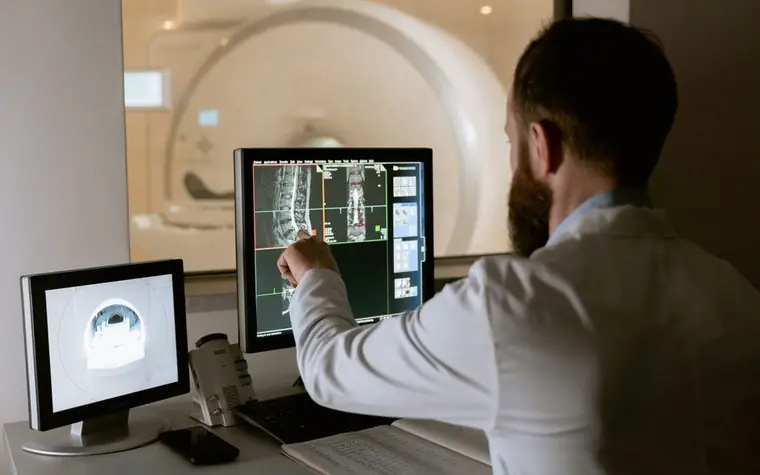
A dog MRI runs $2,000 to $3,500 at a general veterinary hospital with imaging equipment on-site, or $3,000 to $6,000 at a specialty referral hospital, where pricing reflects both a higher-field magnet and a board-certified radiologist reading the scan. Brain and spinal cord cases -- the reason most dogs end up here -- are exactly where MRI outperforms CT, which is also why it costs more: soft-tissue and neurological detail is what an MRI is built to show.
CT: roughly half the price of MRI
A CT scan is the cheaper imaging option, typically $1,000 to $3,000 including anesthesia, running toward $3,500+ at specialty hospitals for more complex studies. CT is faster to acquire and reads bone, chest, and abdominal structures well, which is why it's often the first choice for suspected tumors, trauma, or pre-surgical planning rather than for a wobbly gait or a seizure -- those point toward MRI instead.
The bill is never just the scan
The number a specialty hospital quotes for "MRI" or "CT" usually already bundles several line items: pre-scan bloodwork and a chest X-ray to confirm your pet can safely tolerate anesthesia, the anesthesia itself, the imaging technician's time, and a radiologist's written interpretation of the images. None of those are optional add-ons -- a scan without anesthesia isn't possible in a moving animal, and a scan without a radiologist's read is just a set of images nobody has diagnosed.
Why anesthesia is non-negotiable here
Unlike a human patient, a dog or cat cannot be asked to hold still for 20-45 minutes inside a scanner, so general anesthesia is standard for both MRI and CT in veterinary medicine. That anesthesia is priced separately from the scan itself and scales with your pet's weight and health status -- an older dog with heart or kidney concerns may need additional monitoring during the procedure, which raises the anesthesia line item specifically, independent of what the imaging center charges for machine time.
Location changes the number more than you'd expect
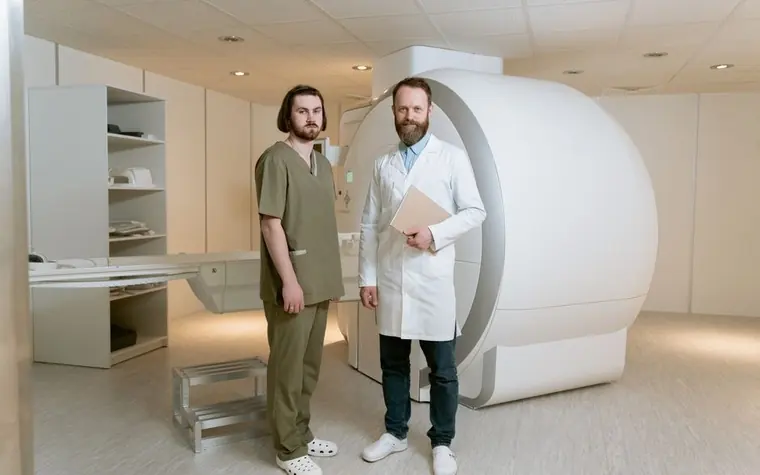
A high-field MRI at a specialty hospital in a major metro area can run $5,200-$6,000 with extended post-op monitoring included, while the same scan at a veterinary teaching hospital in a smaller market might land closer to $3,000-$3,500. Teaching hospitals and university veterinary schools are worth calling specifically if the diagnosis isn't time-critical -- they often run the identical equipment at a meaningfully lower price because the case also serves a training purpose.
What your pet insurance actually pays toward this
Most accident-and-illness pet insurance plans cover MRI and CT as diagnostic procedures once your vet documents they're medically necessary, reimbursing 70%-90% of the bill after your deductible is met. The two places this coverage falls apart are familiar ones: if the neurological symptom was already present or diagnosed before you enrolled, it's excluded as a pre-existing condition, and if your annual coverage limit is on the lower end, a single $4,000-$6,000 imaging bill can consume most of it in one visit.
CT first, MRI only if needed -- ask about a staged workup
Because CT costs roughly half of MRI, some specialists will suggest starting with a CT scan when the suspected problem could plausibly show up on either -- a mass near the skull base, for example, or unclear trauma -- and only proceeding to MRI if the CT doesn't answer the question. This isn't always appropriate (a suspected spinal cord compression usually goes straight to MRI, since CT won't show it clearly), but it's a reasonable question to ask before agreeing to the more expensive scan by default: "Would a CT answer this, or does it need to be MRI from the start?"
Bottom line
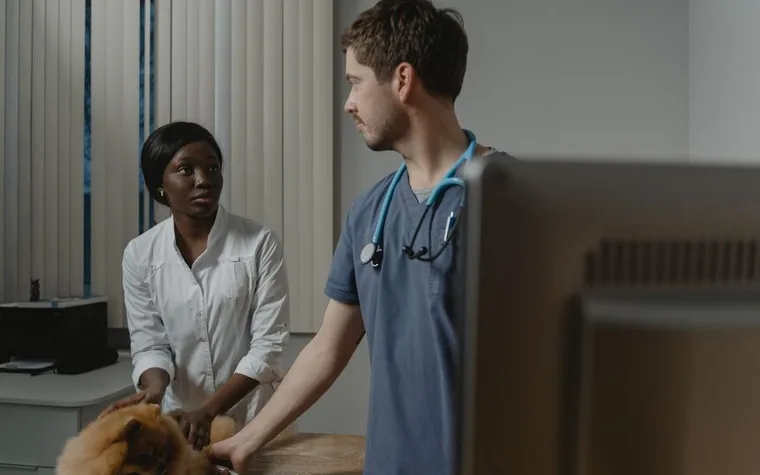
1. Budget $1,000-$3,000 for CT, $2,000-$6,000 for MRI, with specialty hospitals in major metro areas at the top of each range.
2. The quote should already include bloodwork, anesthesia, and a radiologist's read -- ask what's excluded if it doesn't.
3. Call a veterinary teaching hospital if the case isn't urgent; pricing is often lower for the same equipment.
4. Ask whether CT could answer the question before agreeing to MRI, since the price gap is roughly 2x.
Costs are 2026 published estimates from veterinary specialty hospitals and pet cost-guide sources and vary by region, hospital, and your pet's individual case. This article covers cost only and is not veterinary advice -- work with your vet or veterinary neurologist on which scan, if any, your pet actually needs.
All content is fact-checked under our editorial standards.