
How Much Does Cataract Surgery Cost for a Dog? The ACVO Specialist Fee, Pre-Op Tests, and Why Diabetic Dogs Almost Always Need It
Roughly 75% to 80% of dogs diagnosed with diabetes develop cataracts within the first year, and about half get there in under five months, according to veterinary ophthalmology data cited by Cornell University's College of Veterinary Medicine and the Merck Veterinary Manual -- regardless of how well the diabetes itself is controlled. For those dogs, and for the smaller number who develop cataracts from age or genetics alone, surgery is the only treatment that restores vision. Everything else -- eye drops, supplements, "cataract-dissolving" products sold online -- does not reverse a cataract. Here is what the surgery itself actually costs, what happens before you ever reach the operating table, and where pet insurance does and does not help.
Why this isn't a procedure your regular vet performs
Cataract surgery in dogs uses phacoemulsification -- an ultrasonic probe breaks up the clouded lens and suctions it out, usually followed by an artificial intraocular lens implant. It requires equipment (an operating microscope, a phaco unit) and training that general practice veterinarians don't carry, which is why the procedure is performed almost exclusively by a board-certified veterinary ophthalmologist -- a DACVO, Diplomate of the American College of Veterinary Ophthalmologists. Your regular vet can diagnose the cataract and refer you, but the surgery itself happens at a specialty or referral hospital, which is the first reason the bill looks different from a routine vet visit.
The tests you pay for before anyone touches the eye
A specialist won't schedule surgery off a diagnosis alone. Pre-surgical workup commonly runs $700 to $1,400 and typically includes bloodwork and a general health screen (to confirm the dog can tolerate general anesthesia), an ocular ultrasound to check that the retina is intact behind the cataract, and tonometry to rule out existing glaucoma. An electroretinogram (ERG) -- which tests whether the retina still functions, since a cataract can hide retinal disease that would make surgery pointless -- is sometimes bundled into that estimate and sometimes billed separately at $500 to $900. Ask which is true of your quote before you compare it to anyone else's.
The surgery fee itself
Published 2026 estimates from veterinary ophthalmology practices and pet insurers put single-eye cataract surgery at roughly $2,700 to $4,200, averaging around $3,500. Because most dogs with diabetic or age-related cataracts eventually need both eyes done, and because doing both in one anesthetic event is safer and cheaper than two separate procedures, bilateral surgery is commonly quoted at $4,300 to $6,600 total -- less than double the single-eye price, but still the single largest line item most dog owners will ever see on a vet bill. Regional differences are real: a referral hospital in a major metro area will generally quote higher than a specialty practice in a smaller city, for the same procedure with the same equipment.
Why diabetic dogs make up so much of this bill
The mechanism is specific to dogs (cats with diabetes rarely develop cataracts): excess glucose in the lens gets converted to sorbitol, which draws in water and disrupts the lens fibers, clouding them from the inside out -- often within weeks, not years. That speed is why this site's breakdown of ongoing diabetes treatment costs and this cataract-surgery bill tend to land on the same household in the same year: insulin and monitoring bring the blood sugar under control, and the cataract shows up anyway because the lens damage was already set in motion before diagnosis. Well-managed diabetes doesn't reliably prevent the cataract -- it just changes how fast it progresses.
The recovery bill nobody quotes up front
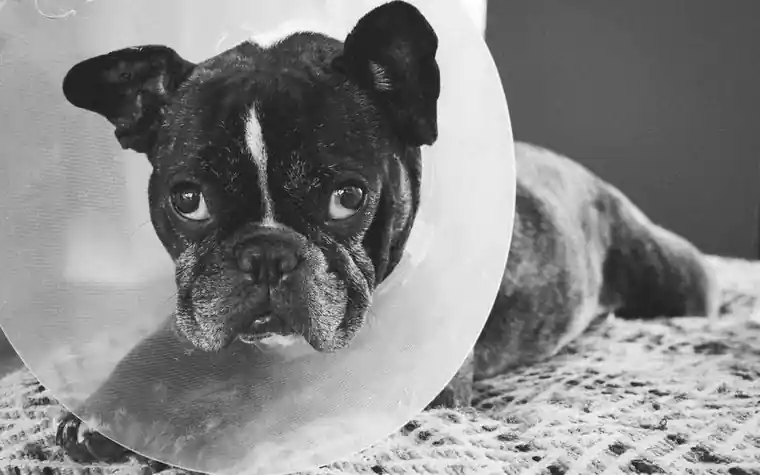
The surgery estimate is not the last invoice. Post-op care commonly adds another $500 to $1,000 over 8 to 12 weeks: topical anti-inflammatory and antibiotic drops applied multiple times a day (often tapering over several weeks), an e-collar worn continuously to prevent rubbing, and typically four to six recheck exams to confirm the retina is healing and pressure inside the eye stays normal. Skipping rechecks to save money is a common way owners end up paying for a second surgery -- post-surgical glaucoma and lens-induced uveitis are the two complications those rechecks exist to catch early, and both cost more to treat than the recheck itself.
What "success" means, and what happens without surgery
Ophthalmology practices and referral centers commonly cite a 90% to 95% success rate for restoring functional vision, meaning a dog that was navigating by sound and smell alone can generally see well enough to move around confidently again. Left untreated, a cataract doesn't just sit there: the lens can leak proteins that trigger lens-induced uveitis (chronic eye inflammation) or push eye pressure up into glaucoma, either of which is painful and can ultimately require removing the eye entirely -- a cheaper single bill, but one that trades away the vision permanently rather than restoring it.
Where pet insurance does and doesn't help
Coverage depends heavily on timing. If a policy was already active before any cataract diagnosis, most accident-and-illness plans cover cataract surgery as an eligible condition, subject to the deductible and reimbursement rate described in this site's guide to waiting periods and pre-existing conditions. The trouble comes when diabetes is diagnosed first: once diabetes is on record as a pre-existing condition, insurers typically also exclude complications of it -- including the cataracts it causes -- even if the policy itself remains active for everything else. Bilateral surgery quotes north of $5,000 can also brush up against a policy's annual coverage limit, particularly on older per-condition or lower-cap plans, which is worth checking against your own policy documents before you assume the whole bill is covered.
Before you book
Get an itemized estimate that separates the pre-surgical workup, the ERG if it's billed apart, the surgery fee itself, and an estimated recovery-care total -- not just a single bundled number. Ask directly whether doing both eyes in one visit is priced at a discount over two separate surgeries, since it usually is. And because cataracts become far more common as dogs pass the age described in this site's look at what a dog costs after age 7, a cloudy or bluish-gray eye at a routine senior exam is worth asking your vet about before it progresses to the point where surgery is the only option left. This article covers cost and general procedure information only, not veterinary advice; a diagnosis and treatment plan should come from your veterinarian or a board-certified veterinary ophthalmologist.
All content is fact-checked under our editorial standards.