
Why Do Purebred Puppies From Breeders Cost $2,000+? The Health Testing and Stud Fee Math Behind the Price
A $2,500-$5,000 price tag on a purebred puppy looks like pure markup until you break down what a responsible breeder actually pays before that puppy is ever born. Health testing, stud fees, and the delivery itself add up long before day one -- and most of that spending happened whether the litter produced two puppies or eight.

The price starts with health testing, not markup
Before a responsible breeder even schedules a mating, breed-specific health screens are run on both parent dogs. Depending on the breed, that means hip and elbow evaluations, eye exams, cardiac screening, and genetic panels for conditions known to run in that line. Industry cost guides put full health testing at roughly $300 to $1,500 per dog, and since both the sire and dam typically need testing, that cost is doubled before a single puppy exists.
OFA and CHIC: what the certifications actually verify
Much of that testing runs through the Orthopedic Foundation for Animals (OFA) and the Canine Health Information Center (CHIC), a database OFA created with AKC parent breed clubs. Hip and elbow evaluations alone commonly run $450-$800 per dog. A CHIC number doesn't mean a dog passed every test with a clean result -- it means the dog was tested for everything the parent club requires for that breed, and the results are on a public database. That's also the detail worth checking yourself: OFA and CHIC records are public, so you can ask a breeder for the number and verify it directly on OFA's website rather than taking their word for it.
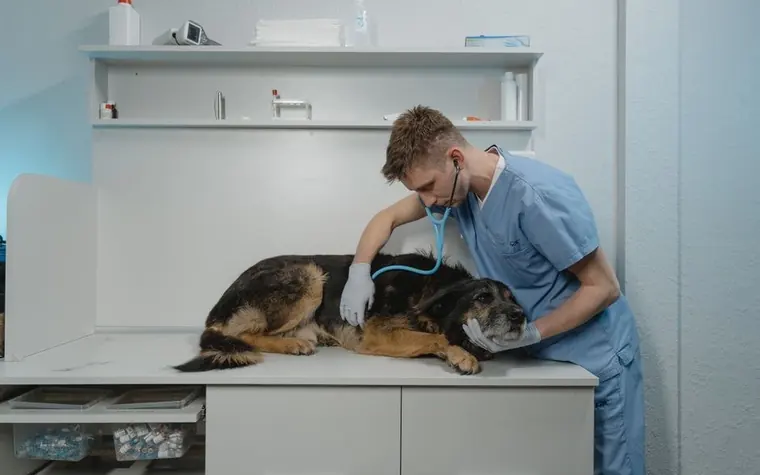
The stud fee -- and why it can rival the health testing bill
If the breeder doesn't own a qualified male, a stud fee is next. Reported ranges run from $300 to $2,000 for most breedings, with fees for proven, in-demand sires exceeding $5,000. On top of the fee itself, using an outside stud can mean travel costs, boarding, and progesterone testing to time the breeding correctly -- timing tests alone are commonly cited around $400. None of this is refundable if the breeding doesn't take, which is part of why breeders price litters to cover the attempt, not just the successful outcome.
Whelping: the delivery itself is a line item
A straightforward, unassisted delivery still involves a veterinary check beforehand and a newborn exam after. A complicated delivery is a different story -- an emergency C-section can push costs to roughly $3,000 depending on the breed and the clinic. Breeds with known whelping difficulties (commonly brachycephalic breeds, for instance) are more likely to need one, and a responsible breeder budgets for that possibility rather than hoping it doesn't happen.
What a full litter costs, start to finish
Add health testing for both parents, the stud fee, prenatal and whelping veterinary care, plus the puppies' own first vaccinations, deworming, and microchips, and industry breeding-cost guides put a full litter at roughly $2,000 to $8,000 before a single puppy is sold. Divide that by a litter of four to six puppies and the per-puppy cost before any breeder time or facility overhead is already a meaningful fraction of the sale price.

Why a $2,500-$5,000 puppy isn't mostly profit
Once testing, the stud fee, and whelping costs are covered, what's left rarely accounts for the breeder's own time -- weeks of round-the-clock care, socialization, and vet visits before the puppy goes home. That's the case made by responsible-breeding advocates for why price isn't a reliable shortcut to quality on its own, but a puppy priced well below the cost of the testing and care that should have gone into it is a sign those steps were likely skipped, not a bargain.
How to verify a breeder is actually doing this
Ask for the sire's and dam's OFA or CHIC registration numbers and look them up directly on OFA's public database rather than accepting a printed certificate at face value. A breeder who can't produce these numbers, or who says testing "isn't necessary" for a breed with known genetic health testing recommendations, is a stronger warning sign than the price itself. Budget for the puppy's first year separately from the purchase price, since vaccination boosters, spay/neuter, and supplies are a second, ongoing cost regardless of where the puppy came from. Whichever way the puppy joins your household, basic obedience training is a cost that shows up either way, since a well-bred puppy still needs the same socialization and manners work as any other.
Bottom line
1. Health testing for both parents runs roughly $300-$1,500 per dog, with hip/elbow evaluations alone at $450-$800.
2. Stud fees commonly run $300-$2,000, higher for proven sires, and aren't refundable if breeding fails.
3. A full litter typically costs a responsible breeder $2,000-$8,000 once testing, whelping care, and puppy vaccinations are included.
4. OFA/CHIC numbers are public -- verify them yourself rather than trusting a certificate alone.
5. A price far below these costs is more often a red flag than a deal -- compare it with what an adoption fee actually includes before assuming purchase price alone tells the whole story.
Cost ranges reflect commonly reported U.S. breeder and veterinary cost guides for 2025-2026 and vary by breed, region, and individual breeder. This article covers cost structure only and is not a guarantee of any specific breeder's practices or veterinary advice.
All content is fact-checked under our editorial standards.