
Home › Grooming, Boarding & Supplies
How Much Does It Cost to Fly With a Pet? The Fee Is Charged Per Direction, Not Per Trip
Ask what it costs to fly with a dog and you will usually get one number back — something like "$150." That number is real, but it answers a smaller question than the one you asked. Airline pet charges are levied per direction, sometimes per flight segment, and the fee is only the line item that appears on your ticket. The carrier you have to buy, the routes that refuse in-cabin pets outright, the minimum ages that change with the destination, and the federal paperwork required to bring a dog back into the country are all part of the real cost, and none of them show up in the quoted fee. This is what the published rules actually say.

The fee is charged per direction, not per trip
This is the single most common budgeting mistake. Airlines publish the in-cabin pet charge as a one-way amount. A round trip is therefore two charges, not one. And because several carriers apply the charge per flight segment rather than per direction, a round trip with one connection each way can trigger the fee four times instead of twice. Before you compare airlines on fee alone, look at the itinerary: a nonstop on a slightly pricier carrier can end up cheaper than a connecting itinerary on a cheaper one. Across major U.S. carriers, published in-cabin fees currently sit in a band of roughly $95 to $150 each way for domestic travel, but these change without much notice, so treat the airline's own page as the only number worth planning around.
What Delta publishes, in detail
Delta is worth reading closely because its schedule is unusually specific and it shows how these fees are structured. For tickets issued on or after April 8, 2025, the carry-on pet fee is $150 for travel within the U.S., Canada, Puerto Rico and the U.S. Virgin Islands. For international travel the fee is $200, and travel to or from Brazil is also $200 on tickets issued on or after that same date. Note what that structure implies: an international trip with a pet starts at $400 in fees before you have bought a carrier, paid a veterinarian, or booked anything on the ground.
The carrier is the real constraint, not the pet
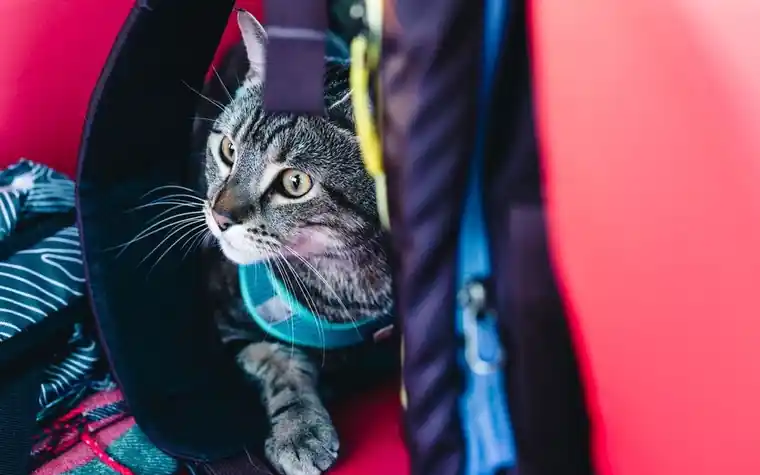
Whether your animal can fly in the cabin is decided by whether its kennel fits under the seat in front of you, not by how well behaved it is. Delta recommends a soft-sided kennel with maximum dimensions of 18" x 11" x 11", on the grounds that this size fits most aircraft, and requires that the kennel be leak-proof with ventilation openings on three sides for domestic travel and four sides for international travel. The pet must be able to move around comfortably inside without touching the sides. Southwest states the requirement more plainly still: carriers must be stowed under the seat, and the pet — including head and tail — must remain inside the carrier at all times in the gate area, during boarding and deplaning, and throughout the flight.
Two practical consequences follow. First, a compliant soft-sided carrier is a real purchase, generally in the $40 to $90 range, and buying one that measures a half-inch over the limit is an expensive mistake at the gate. Second, if your dog cannot stand and turn inside a bag that size, in-cabin travel is not an option regardless of budget, and you are looking at cargo shipping, ground transport, or not traveling.
Some routes do not allow in-cabin pets at all
This catches people who have already paid for tickets. Delta does not permit pets in the cabin to or from Australia, Barbados, Brazil, Colombia, the Dominican Republic, Hawaii, Hong Kong, Iceland, Jamaica, New Zealand, South Africa, the United Kingdom and the United Arab Emirates. Hawaii is the one that surprises domestic travelers most, since it feels like an ordinary domestic route and is not treated as one. Restrictions like these are usually driven by the destination's own quarantine and import law rather than by the airline, which means switching carriers rarely solves the problem. Check the route before you buy the ticket, not after.
Minimum age depends on where you are going
Age rules are not a single number either. On Delta, pets must be at least 8 weeks old for domestic travel. For international travel, dogs must be 6 months old and cats at least 16 weeks old, and for travel to the European Union the minimum is 15 weeks. Southwest likewise requires pets to be at least 8 weeks old and accepts only small vaccinated domestic cats and dogs. If you are collecting a puppy and planning to fly home with it, these minimums may decide your travel date for you — one more reason the first-year budget for a puppy is rarely just the adoption or breeder price.
How pets are counted, and why it matters
Airlines count carriers, not animals, and the counting rules differ. Southwest allows each ticketed customer to bring one pet carrier, and each carrier may hold up to two small cats or dogs of the same species. So two small cats can travel on one fare-paying passenger's single pet charge — relevant if you are relocating rather than vacationing, where flights are one more line in the long-run cost of keeping a cat, while a cat and a dog cannot share the carrier. Cabin space for pets is also capped per flight on every airline, which is why these bookings are usually made by phone or require advance notice. Booking the ticket does not book the pet.
Coming back into the U.S.: the CDC rules apply to your dog too
Americans traveling abroad with their own dog are frequently blindsided by this, because the requirements apply on return, not just on import. Since August 1, 2024, all dogs entering the United States must appear healthy on arrival, be at least six months of age, be microchipped, and be accompanied by a CDC Dog Import Form online submission receipt. For a dog that has only been in dog-rabies-free or low-risk countries in the previous six months, that form is the only documentation CDC requires. The sequencing detail matters: the microchip must be implanted before the rabies vaccine is given, or the vaccination is treated as invalid. A dog that has been in a high-risk country for dog rabies in the past six months and is not vaccinated against rabies will not be allowed to enter.
Budget accordingly. A microchip placement is a modest clinic charge, but a repeated rabies vaccination because the chip went in second, or an emergency titer test, is not — and neither is being turned around at the border. If your dog's shots are not current, the per-dose price of the core vaccines is the cheapest part of this whole exercise.
What a realistic total looks like — and what to check before you book
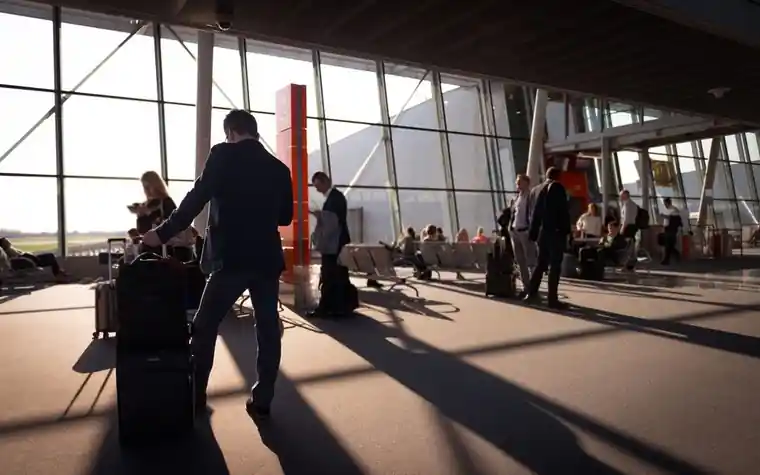
Take a domestic round trip with one connection each way on a carrier charging $150 per segment. Fees alone: $600. Add a compliant carrier at roughly $65, an absorbent pad and collapsible bowl, and a pre-travel veterinary visit if your destination or airline requires health documentation. You are near $800 before the human ticket. Now price the alternative honestly: several nights of boarding at the going nightly rate may well come in lower, and for many trips it is also the less stressful option for the animal. Flying with a pet is sometimes the right call and sometimes just the assumed one; run both numbers.
Confirm the fee on the airline's own page and whether it is charged per direction or per segment. Measure your carrier against the published maximum, and check the ventilation-sides requirement if you are leaving the country. Verify the route is not on the airline's excluded list. Check the age minimum for your specific destination. Reserve the pet's cabin space, separately from the ticket. If you are leaving the U.S., start the microchip-then-rabies sequence early and file the CDC Dog Import Form before your return. Finally, ask your clinic — not the airline — whether your individual animal should be flying at all. This article covers costs, rules and procedures only. It is not veterinary advice; consult your veterinarian about your pet's health, and confirm all fees and entry requirements with the airline and the relevant government agency before you travel.
All content is fact-checked under our editorial standards.