
Why Your Pet Insurance Premium Jumps at Renewal — and What 16 States Require Insurers to Disclose
The quote you shopped on is a first-year price. The number that actually decides what pet insurance costs you is the one on the renewal notice, and for most policies it goes up every year — not because you filed a claim, but because your pet had a birthday. That is legal in every state. What is not the same everywhere is whether the insurer had to tell you it was going to happen. Sixteen states have adopted the National Association of Insurance Commissioners' Pet Insurance Model Act (#633), which requires that disclosure. In the other thirty-four, the rule is whatever your policy says.
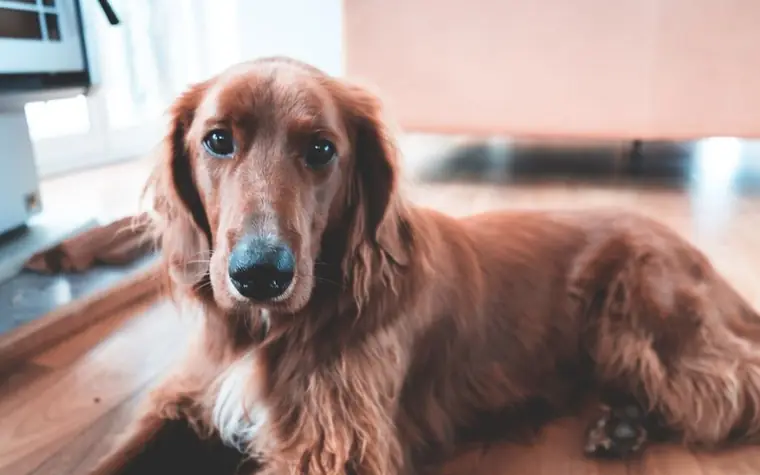
The renewal notice is where the price gets set
Pet insurance is an annual contract. Each renewal is effectively a new twelve-month term priced on current information, and the two pieces of information that move most are your pet's age and your ZIP code's claim costs. A policy that cost $45 a month on a two-year-old Labrador is not priced against a two-year-old Labrador forever. Veterinary claim frequency and severity both rise with age, and the premium follows. This is why average monthly premium figures are best read as an entry price for a young, healthy animal rather than a lifetime number.
The practical consequence: the cheapest quote at enrollment is not necessarily the cheapest policy over ten years. Two insurers can start within a few dollars of each other and diverge sharply by year six, depending on how steeply each one rates age.
Three things insurers can price on — and must disclose in some states
Section 4 of Model #633 lists what a pet insurer has to tell consumers. One item is specifically about increases. The model requires the insurer to disclose "whether the pet insurer reduces coverage or increases premiums based on the insured's claim history, the age of the covered pet or a change in the geographic location of the insured."
Read that as a checklist of the three levers:
- Age of the covered pet. The most common driver, and the one that operates whether or not you ever file.
- Claim history. Not every insurer surcharges individual claim history, and some state that they do not. This is the item worth confirming in writing.
- Geographic location. Moving from a rural county to a metro area with higher vet prices can raise the premium at renewal on its own.
Section 4 also requires disclosure of the exclusions a contract carries — preexisting, hereditary, congenital and chronic — of every provision that caps what gets paid, and of the fact that the underwriting company may differ from the brand name on the website. That last one matters more than it sounds: several well-known brands are marketing front-ends for a smaller number of underwriters.
Sixteen states have it. Thirty-four do not.
Model #633 was adopted by the NAIC's Property and Casualty Insurance (C) Committee on August 1, 2022. Adoption by the NAIC does not make it law anywhere; each state has to enact it. As of the NAIC's Summer 2025 state page for the model, the following appear in the model-adoption column: California, Delaware, Florida, Hawaii, Louisiana, Maine, Maryland, Mississippi, Montana, Nebraska, New Hampshire, Ohio, Pennsylvania, Rhode Island, Vermont and Washington. Idaho, New Mexico, Tennessee and Utah appear only under related activity — statutes that mention pet insurance as a license type or line of business, not consumer-disclosure laws.
If your state is on the first list, the disclosures above are an obligation your insurer owes you and your state insurance department has jurisdiction over. If it is not, you can still ask for the same information; you just cannot cite a statute when you do.

The 15-day free look is a refund window, not a cancellation right
Model #633 gives applicants fifteen days from receipt of the policy to examine it and return it for a full refund, with the premium refunded within thirty days of the insurer receiving it, and the policy treated as void as if it had never been issued. There is one condition that people miss: it only applies if you have not filed a claim. The notice has to be printed prominently on the first page.
Fifteen days is short, and it runs from receipt, not from purchase. If you enroll and the policy documents sit unopened in an inbox for two weeks, the window closes. The free look is the one moment where you can read the actual policy — as opposed to the marketing page — and walk away at no cost, so it is worth treating as a scheduled task rather than a formality.
What a renewal cannot do
Two definitions in the model close loopholes that used to cost policyholders real money.
First: "A condition for which coverage is afforded on a policy cannot be considered a preexisting condition on any renewal of the policy." An insurer cannot cover your dog's allergy in year two and then reclassify it as preexisting in year three. Second: "Waiting periods may not be applied to renewals of existing coverage." Your waiting period is served once, at the start.
Section 5 adds that where an insurer does apply a preexisting-condition exclusion, the insurer bears the burden of proving the exclusion applies to the condition being claimed. That is the opposite of how most denials feel in practice, and it is a useful sentence to have in hand when appealing one. Waiting periods themselves are capped at thirty days for illness and orthopedic conditions, and waiting periods for accidents are prohibited outright. See how waiting periods and preexisting exclusions actually work for the mechanics.
Your insurer cannot require an exam to renew you
Section 5 also states that a pet insurer "must not require a veterinary examination of the covered pet for the insured to have their policy renewed." This matters because a renewal exam is how an insurer would discover new conditions to exclude going forward. Related: eligibility to buy a contract cannot be conditioned on joining a separate wellness program — a rule aimed at bundling practices. Those add-ons are prepaid care rather than risk transfer, and belong in a separate line of your budget.
One place an exam does come up legitimately: the model allows an insurer to waive its waiting period after a veterinary examination, and the policyholder pays for that exam unless the policy says otherwise.
Four checks when the renewal price jumps
1. Compare like for like. A renewal notice can quietly change the terms alongside the price. Put last year's declarations page beside this year's and confirm every figure is unchanged before you judge the increase — otherwise you are comparing two different products. Those figures are also what decides your payout on a bill.
2. Ask which lever moved it. Age, claims or location. In a model-adoption state, the insurer already had to disclose which of these it uses; ask them to identify which applied to your renewal.
3. Price the switch honestly. Switching resets waiting periods and, critically, anything treated so far becomes preexisting at the new insurer. For a pet with any claim history, a higher renewal is often still cheaper than a new policy that excludes the condition you are most likely to claim on.
4. Ask for a re-quote before you leave. Loosening the terms on your existing contract keeps your coverage history intact and can bring the price back near last year's number — an option worth exhausting before starting over elsewhere.
The short version
Pet insurance premiums rise mainly with your pet's age, and that is priced in from the start. Sixteen states require the insurer to disclose whether it raises premiums on age, claims or location; there is a 15-day free look if no claim has been filed; conditions covered in one term cannot be called preexisting at renewal; waiting periods do not restart; and no insurer can require a vet exam as a condition of renewing. Check your state insurance department for the version that applies to you.
This article covers cost and coverage rules only. It is not veterinary advice and does not address diagnosis or treatment; talk to your veterinarian about your pet's care. It is also not legal advice — policy terms and state law vary, and your own policy documents and state insurance department are the controlling sources. Sources: NAIC Pet Insurance Model Act #633 (adopted August 1, 2022) and the NAIC state page for Model #633, Summer 2025 edition. Verified August 2026.
All content is fact-checked under our editorial standards.