
How Much Does Dog ACL (Cruciate Ligament) Surgery Cost? TPLO, TTA, and Extracapsular Repair Compared
A limp that doesn't go away, a back leg your dog suddenly won't put weight on — a torn cranial cruciate ligament (the canine equivalent of an ACL tear) is one of the most common reasons dogs end up in orthopedic surgery. The bill depends heavily on which of three repair techniques your vet recommends, and on your dog's size.
TPLO — the Gold Standard for Larger Dogs
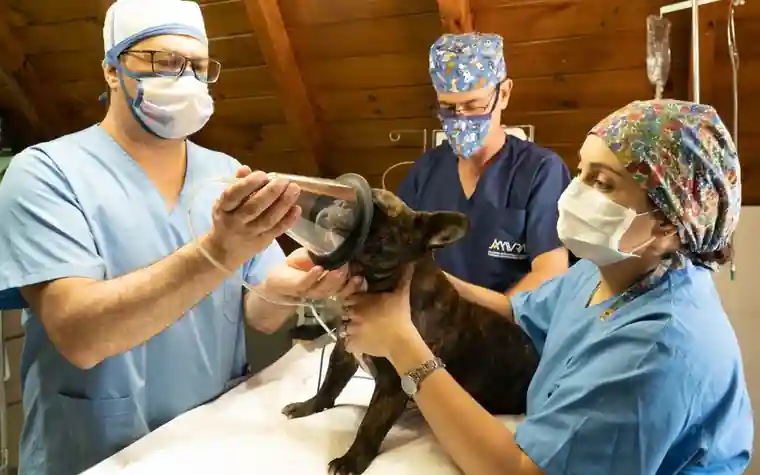
Tibial Plateau Leveling Osteotomy (TPLO) is the most evidence-backed repair for medium and large, active dogs, and it's priced accordingly: $3,500-$7,000 per knee. The procedure cuts and rotates the top of the tibia to change the joint's mechanics so the torn ligament's job becomes unnecessary, rather than trying to replace it. That's a more involved bone surgery than the other two options, which is most of why it costs more — it typically requires a board-certified veterinary surgeon, general anesthesia, intraoperative X-rays to confirm the cut angle, and a titanium or stainless steel bone plate left in permanently.
TTA — a Similar Outcome, a Similar Price
Tibial Tuberosity Advancement (TTA) is a different bone-cutting technique aimed at the same mechanical goal as TPLO, and outcome studies generally find the two comparable for most dogs. Cost runs $2,800-$5,500 per knee — close to TPLO, sometimes a bit less depending on the surgeon and region. Which of the two your vet recommends often comes down to your dog's specific knee anatomy and the surgeon's training, more than one being a clearly cheaper or better default choice.
Extracapsular Repair — the Budget Option, With a Size Limit
Extracapsular (lateral suture) repair uses a heavy synthetic suture routed around the joint to stabilize it, without cutting bone. It's the least invasive and least expensive of the three, at roughly $1,200-$2,500 per knee. The tradeoff is durability: it's generally recommended only for dogs under about 30 lbs, since the suture is more likely to stretch or fail under the joint forces a larger, heavier dog puts on it. For a small dog, though, it's often a genuinely comparable option to the bone-cutting techniques rather than a compromise.

The Number on the Estimate Isn't the Final Bill
None of the ranges above are the whole story. Getting to a diagnosis typically involves an exam visit and X-rays, and most surgeons want current pre-anesthetic bloodwork — commonly around $200 for labs and roughly $600 for diagnostic imaging, separate from the surgery fee itself. Add post-op pain medication, a cone or brace, and a course of physical rehabilitation (often $1,000 or more across several sessions), and an all-in total commonly lands at $3,000-$7,000+ per knee once every line item is counted.
Why the Other Knee Often Follows
One detail owners aren't always warned about upfront: roughly 40-60% of dogs that tear one cruciate ligament go on to tear the other within one to two years. The leading theory is that the joint conformation that predisposed the first knee to failure is usually present on both sides, and the dog also shifts extra weight onto the "good" leg while the first one heals, accelerating wear on it. Budgeting for a single surgery is reasonable, but it's worth knowing the second knee is a real possibility, not a rare complication.
Where Pet Insurance Gets Complicated
This is exactly the scenario behind bilateral exclusion clauses in pet insurance — once one knee has a cruciate claim on record, some insurers will exclude the opposite knee from future coverage entirely, treating it as a pre-existing condition tied to the same underlying joint issue. If ACL surgery is a real risk for your dog's breed or build, checking how your specific policy defines bilateral conditions before you need it matters more here than in almost any other orthopedic scenario.
What Actually Drives the Choice Between the Three
Vets don't pick a technique by price alone. Dog weight, activity level, knee angle (tibial plateau angle), age, and the surgeon's own training and outcomes data all factor in. A 70 lb active dog and a 12 lb lapdog with the same torn ligament are often steered toward completely different repairs — which is why getting a specific quote from a surgeon who has actually examined your dog's X-rays matters more than any general price range.
Putting the Numbers in Order
1) TPLO: $3,500-$7,000 per knee — most common for larger, active dogs. 2) TTA: $2,800-$5,500 per knee — a comparable alternative in many cases. 3) Extracapsular repair: $1,200-$2,500 per knee — generally limited to dogs under 30 lbs. 4) Add roughly $800-$1,600+ for pre-op diagnostics and rehab on top of any of the three. 5) Budget for the real possibility of a second surgery on the opposite knee, and check how your pet insurance policy handles bilateral exclusions before you need it. Costs vary by region, surgeon, and hospital type; this article is not veterinary advice, and any dog showing lameness needs an in-person exam and diagnosis from a licensed veterinarian.
All content is fact-checked under our editorial standards.