
How Much Does Heartworm Treatment Cost If Prevention Failed? The Three-Injection Protocol, Stage by Stage
A single monthly heartworm preventive costs somewhere between $6 and $20 — the annual math for keeping a dog on prevention is a separate, much smaller number. Treating a dog that already has adult heartworms costs ten to twenty times that much, and the bill does not arrive all at once. The American Heartworm Society's recommended protocol is staged over roughly three months, with separate costs at each stage — pre-treatment workup, the melarsomine injections themselves, and the monitoring in between. Knowing the stages is what makes a $700 estimate and a $1,500 estimate both plausible for the same diagnosis.

Why treatment is staged instead of a single visit
Adult heartworms live in the pulmonary arteries and heart. Killing them quickly floods the bloodstream with dead worm fragments, which can cause a life-threatening blockage in the lungs. The American Heartworm Society's current guidelines call for a staged approach precisely to reduce this risk: an antibiotic course first, then a single melarsomine injection, then a pair of injections given 24 hours apart about a month later. The three-injection version of the protocol produces a 98% reduction in worm burden and is the version AHS recommends over giving all the melarsomine at once or skipping straight to the "two-injection" alternative.
Stage one: confirming the diagnosis (roughly $150–$400)
Before any treatment starts, a positive antigen test from a screening visit is typically confirmed and staged. This usually includes a second antigen test, a microfilaria check, chest X-rays to assess how much heart and lung damage is already present, and baseline bloodwork — a standard panel runs roughly $88–$295 depending on what's included — to confirm the dog's kidney and liver function can tolerate the drugs ahead. Chest X-rays alone commonly run $150–$250 at a general practice, and the full staging workup (X-rays plus labs) is where estimates of $150–$400 for this step come from. Dogs with more advanced disease may need cardiac ultrasound, which adds to this stage's cost.
Stage two: doxycycline and the start of exercise restriction ($30–$60)
Most protocols start a four-week course of doxycycline before any melarsomine is given. The antibiotic targets Wolbachia, a bacteria that lives inside heartworms and that current research ties to some of the inflammation caused when worms die. A four-week course of doxycycline generally costs $30–$60. This is also when exercise restriction begins — the dog's activity has to stay minimal from this point forward, because physical exertion raises the risk of a fatal pulmonary reaction as worms die, whether from the antibiotic, a preventive, or the melarsomine to come.
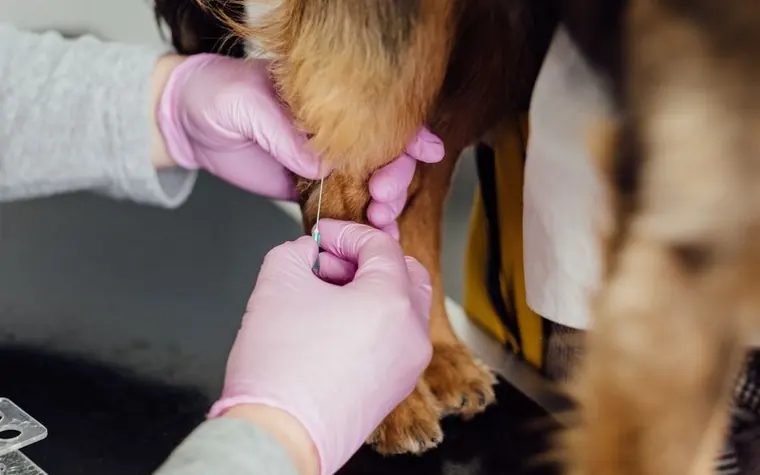
Stage three: the first melarsomine injection, around day 60
Roughly 30 days after starting doxycycline, the dog typically receives its first melarsomine injection, given deep into the lumbar muscles, along with a course of glucocorticoids to control inflammation from dying worms. A single melarsomine injection plus the associated exam and a round of steroids commonly falls in the $150–$400 range depending on the dog's weight, since melarsomine is dosed by body weight. Steroid courses run an additional $10–$40 per round on top of that.
Stage four: two more injections, 24 hours apart, around days 90–91
About a month after the first injection, the dog returns for two more melarsomine injections given on consecutive days. This is the most expensive single stage, since it involves two dosed injections, two clinic visits, another course of steroids, and — depending on the practice and the dog's disease severity — overnight hospitalization or observation to watch for reactions in the hours after each injection. Combined, this stage commonly adds another $300–$700 to the total, which is why full treatment estimates cluster around $500–$1,500 for the melarsomine phase alone across all three injections.
Stage five: exercise restriction continues, then a follow-up test
AHS guidance calls for strict exercise restriction from the start of treatment through six to eight weeks after the final injection — leash walks only, no running, no off-leash yard time. This stage has no direct clinic cost, but it is the stage owners most often shorten on their own, which is also the stage most tied to treatment failure and emergency visits. A follow-up antigen test, typically recommended around six months after the last injection to confirm the worms are gone, adds one more office visit and test fee, generally in the same range as the initial confirmation test.

What pushes a bill toward the high end
Three factors move a case from the $700 range toward $1,500 or more. Body weight matters because melarsomine is priced per dose by weight, so a 70-pound dog costs more per injection than a 20-pound dog. Disease severity matters because a dog with visible heart strain or fluid in the lungs on X-ray needs more monitoring, sometimes overnight hospitalization at each melarsomine stage, and occasionally additional medication for heart failure symptoms before treatment can safely begin. Complications during the 24-hour window after an injection — coughing, lethargy, or signs of a pulmonary reaction — can turn a same-day visit into an emergency one, which prices on its own scale entirely separate from the scheduled protocol. Dogs already enrolled in a policy should also check whether heartworm disease was diagnosed before or after purchase, since preexisting-condition rules determine whether treatment is reimbursable at all.
Why the "slow kill" alternative is not a cheaper version of the same treatment
Some owners are quoted a lower-cost option built around a monthly heartworm preventive alone, given for many months, sometimes with doxycycline added, instead of melarsomine. This approach can take a year or more to clear adult worms, if it clears them at all, and the American Heartworm Society does not recommend it as a substitute for the staged melarsomine protocol — the worms continue causing pulmonary artery damage for the entire extended period they remain alive. A lower sticker price at each visit does not necessarily add up to a lower total cost once ongoing damage and monitoring are counted.
Cost checklist by stage
1. Staging workup — confirmatory antigen test, chest X-rays, bloodwork: roughly $150–$400.
2. Doxycycline course — four weeks, roughly $30–$60.
3. First melarsomine injection — with exam and steroids: roughly $150–$400, scaled to body weight.
4. Two-injection stage — melarsomine ×2, steroids, possible overnight monitoring: roughly $300–$700.
5. Follow-up antigen test, around six months later: similar to the initial confirmation test.
Total for an early-caught, otherwise healthy dog commonly lands between $700 and $1,500; more advanced disease or a larger dog can push the total higher.
This article covers the staged cost structure of heartworm treatment and is not veterinary advice. It does not address diagnosis, dosing, or whether a specific dog is a candidate for this protocol — those decisions belong to your veterinarian. Sources: American Heartworm Society current canine guidelines and clinical FAQs on the three-injection melarsomine protocol; published veterinary cost-guide ranges for staged heartworm treatment. Verified August 2026.
All content is fact-checked under our editorial standards.